

The Rise of Conscious Purchasing and the Opportunity for Business Builders



Consumer priorities are shifting. From buying Canadian to supporting brands that align with personal values, more people are making deliberate choices about where they spend their money. This growing trend toward conscious purchasing presents an important opportunity for business builders to reassess what drives customer decisions and whether their brand is aligned with what matters most today.
Is now the time to reset how we make purchase decisions?
Buy what reflects who you are. Get the value you deserve. Get more value from the things that matter to you. Make active choices.
With current events as noteworthy as they are, it feels like the right time to address us not only as consumers, but also as business builders.
Every day, consumers make dozens of purchasing decisions - many of them almost automatically. We reach for the brands we know, the products we've always bought and the services we've always used.
But what happens when the world around us changes?
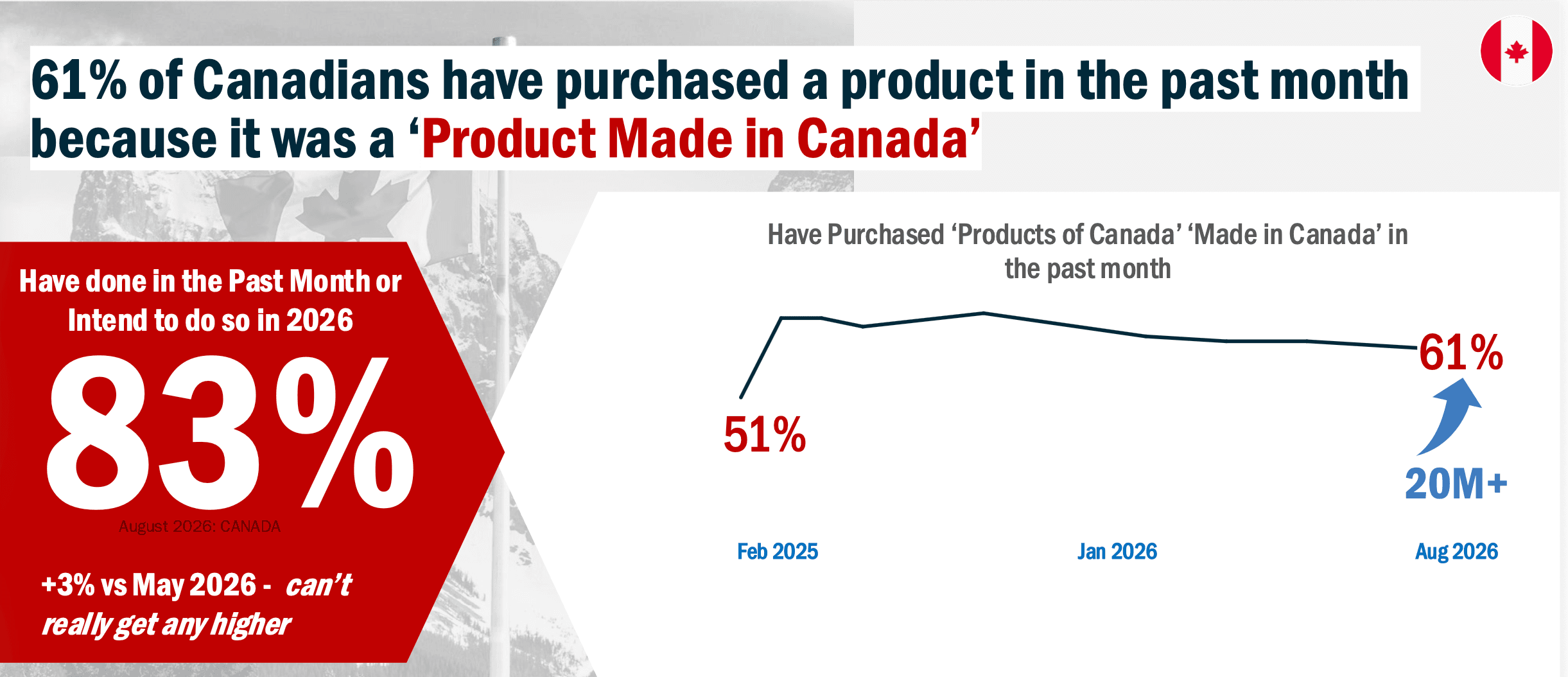
For me, the recent shifts in Canada's relationship with the United States created a personal wake-up call. For decades, the closeness between our two countries made many things feel natural, convenient and almost automatic. When circumstances changed, it forced us to think differently about what we had previously taken for granted. A great recent example supported this as a study and webinar by IMI that showcased how 83% of Canadians have “purchased a product or intend to purchase a product because it’s made in Canada”. Their action changed as a result of the Canada-US trade relationship.
That prompted a broader question that suggests we can be in control, not just because circumstances change:
What if we applied the same thinking to the everyday purchasing decisions we make as consumers?
What if we stopped and asked: Why am I buying this? Does this product, brand or company still provide the value it did when I first made the decision to buy it?
What is Conscious Purchasing?
Conscious Purchasing is about rethinking the ordinary purchases that make up our lives and choosing products, brands and companies based on what actually matters to us.
And IMI’s Pulse data supports the assertion that a majority of consumer support brands that have a shared view of the world. In fact, 52% of North American consumers “purchase because a brand has a stated purpose I relate to”. This is strongest with Millennials (59%) and lowest with Boomers (40%).
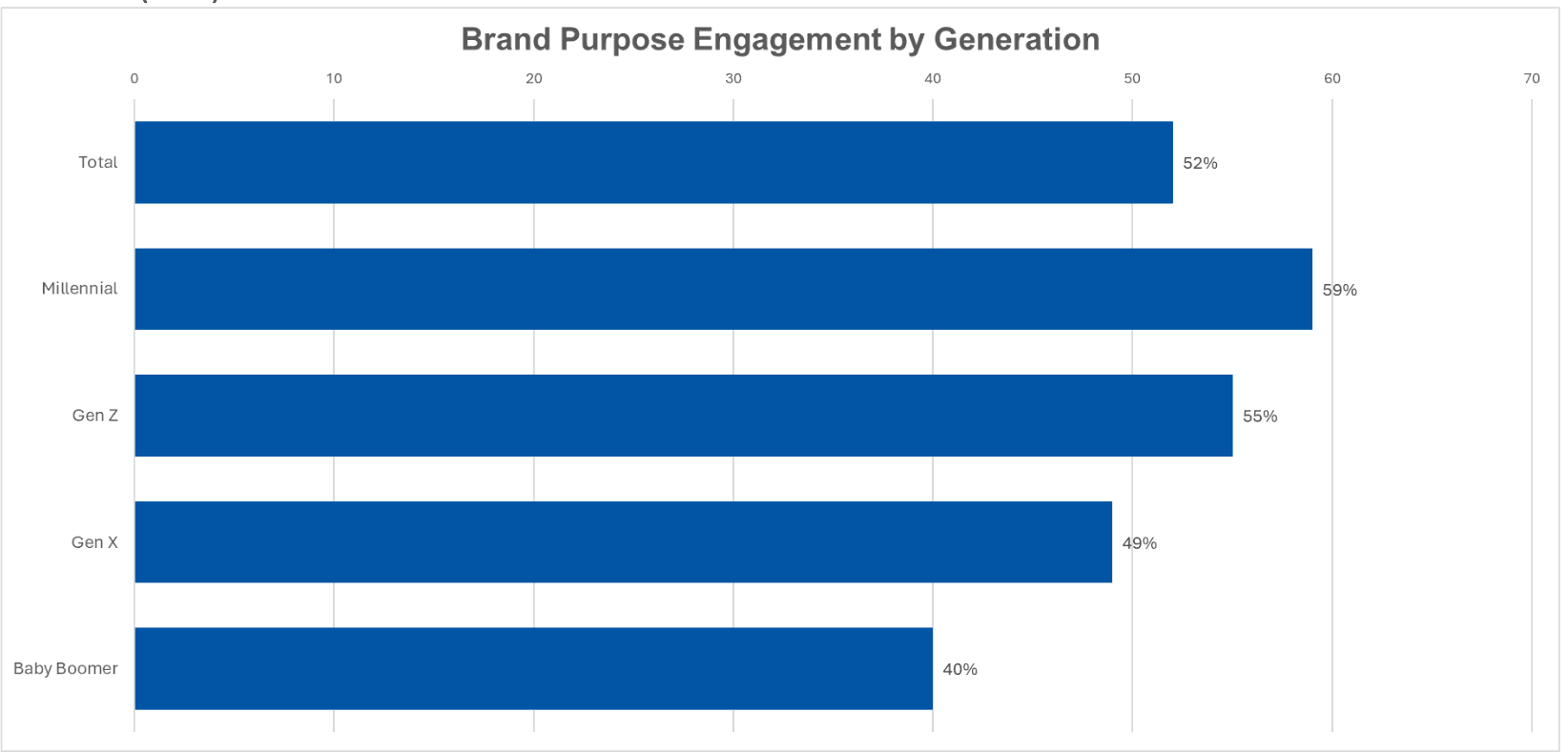
It suggests that further digging is needed to make sure you know what your brand stands for in consumers’ perceptions, especially in a rapidly changing cultural environment.
That might mean supporting Canadian businesses. It might mean choosing a company whose purpose or community impact aligns with your values.
It might mean looking for environmentally responsible practices, positive labour practices or greater transparency. It might mean buying something that lasts longer, performs better or provides more benefits for the price.
And sometimes, the most conscious purchase may simply be the one that saves you money.
This isn't about spending more to maximize benefits you don't need, it's about understanding the benefits you are actually delivering and deciding which ones matter to your brand or business.
Stronger Value Is at the Heart of Conscious Purchasing
We know how the impact of recent inflation is a change agent for purchase decisions in itself, especially among younger consumers. We also know that value isn't simply about paying the lowest price.
It's about understanding the complete benefit set you receive for the money you spend. That could include:
Quality
Performance
Durability
Longevity
Features
Service
Warranty
Convenience
Health and wellness benefits
Environmental or social benefits
And even the intangible value of what the brand stands for
Because brands are more than products. They can also be a badge of identity - a reflection of what we believe, what we prioritize and how we want to participate in the world.
In an economy where affordability is under pressure, every dollar matters. Being more conscious about what we buy can help us spend those dollars more effectively, and there may be another benefit: feeling better about the choices we make.
Start Asking Better Questions
The goal isn't to tell consumers which brands are good or bad, or what they should buy. The goal is to ask better questions.
Before making a purchase, consider:
What am I getting?
What am I paying?
Who am I supporting?
What do I value?
Does this purchase reflect the person I want to be, and the household I want to support?
Every purchase is a choice and sometimes, the choices we make automatically are worth reconsidering.
What Does This Mean for Business Builders?
Here's the inside baseball.
If you're building or managing a brand, when was the last time you reassessed the hierarchy of reasons your customers choose you?
When was the last time you asked your best customers why they continue to buy?
What about your category-heavy consumers? Your loyal customers? Your potentially vulnerable customers?
And when was the last time you tested whether the things you believe drive purchase are actually the things driving purchase today?
A lot can change in a short period of time. That means the customer insights sitting in your "customer bible" may deserve a fresh look.
Recent IMI research provides an interesting example. According to IMI's research, 83% of Canadians said they had purchased, or intended to purchase, a product because it was made in Canada.
Whether Canadian origin becomes a purchase driver for your particular category is something worth investigating - not simply assuming.
Made in Canada is one example of Conscious Purchasing. There are many others.
Six other brand practices that can trigger conscious purchasing:
Environmental Responsibility Lower carbon footprint, renewable energy, reduced packaging, recyclability, waste reduction and sustainable materials.
Ethical & Social Responsibility Fair labour practices, responsible sourcing, worker treatment, human rights and community investment.
Health & Consumer Wellbeing Healthier ingredients, reduced chemicals or additives, nutritional quality, safety and wellness benefits.
Product Quality & Longevity Durability, performance, reliability, repairability, warranties, longer product life and avoiding disposable consumption.
Transparency & Accountability Ingredient and material disclosure, supply-chain traceability, credible certifications, third-party verification and honest claims.
Value & Consumer Benefit Superior benefits for the price, total cost of ownership, functional performance, convenience and measurable consumer benefits.
The important question isn't simply which of these sounds good, the question for a business builder is:
Which of these matters to my customers and can my brand credibly own it?
Turning Conscious Purchasing Into Competitive Advantage
For businesses, there are several strategic questions worth exploring.
1. Natural Fit
Is there a conscious-purchasing territory that naturally fits your brand, product and key customer?
Start with the consumer need. Then validate it with research, customer conversations and actual purchase behaviour.
2. Ownership
If you discover a meaningful purchase driver, can your brand genuinely own it?
A compelling positioning isn't created by putting a new message into an advertising campaign. It is built over time through consistent behaviour, product experience and communication.
3. Messaging Priority
Does this benefit actually deserve a higher position in your messaging hierarchy?
Every brand has limited consumer attention. A new benefit may be interesting, but if it doesn't change the purchase decision, it can simply become another piece of marketing clutter.
4. Less Is More
Is there something you can remove or lower in priority?
At IMI, we've learned that more messaging can ultimately reduce comprehension, that then potentially reduce purchase effectiveness.
The objective isn't to say everything.
It's to make sure the most important things are understood.
5. Authenticity
Finally, can you actually live it?
Conscious Purchasing cannot become another version of "cause of the day" marketing.
Consumers can increasingly distinguish between something that is embedded in a company's DNA and something that has simply been added to the campaign.
True ownership may take years.
That's not a weakness.
That's what makes it credible.
The Opportunity
For consumers, Conscious Purchasing is an invitation to stop buying entirely on autopilot. For business builders, it's something more:
An opportunity to understand what your customers increasingly care about, and determine whether your brand can deliver meaningful value against those priorities.
The question isn't whether consumers have changed.
The question is how much their purchase decision hierarchy has changed and whether your brand has changed with them.
So here's the challenge: Take your top 3 products or services.
Look at the customers who matter most to your business.
Ask them what they value today.
Ask what has changed.
Ask what would make them reconsider their current brand choice.
Then compare those answers with the assumptions sitting inside your current brand strategy.
You may discover that the next source of growth isn't another product feature, another promotion or another advertising campaign. It may be a better understanding of why your customers choose and what they consciously choose to support.
If you're a business builder and this idea resonates, start the conversation. What is the conscious reason your customers choose your brand and is it still the reason you think it is?
Conscious Purchasing isn't simply a consumer trend. It's a signal that purchase decision hierarchies are constantly evolving. At IMI, we help brands understand which drivers matter most to their customers, which benefits truly influence choice, and where the greatest opportunities exist to create meaningful value. Because better decisions start with better consumer understanding.