

Experiential Marketing Best Practice Principles That Actually Deliver Brand Results


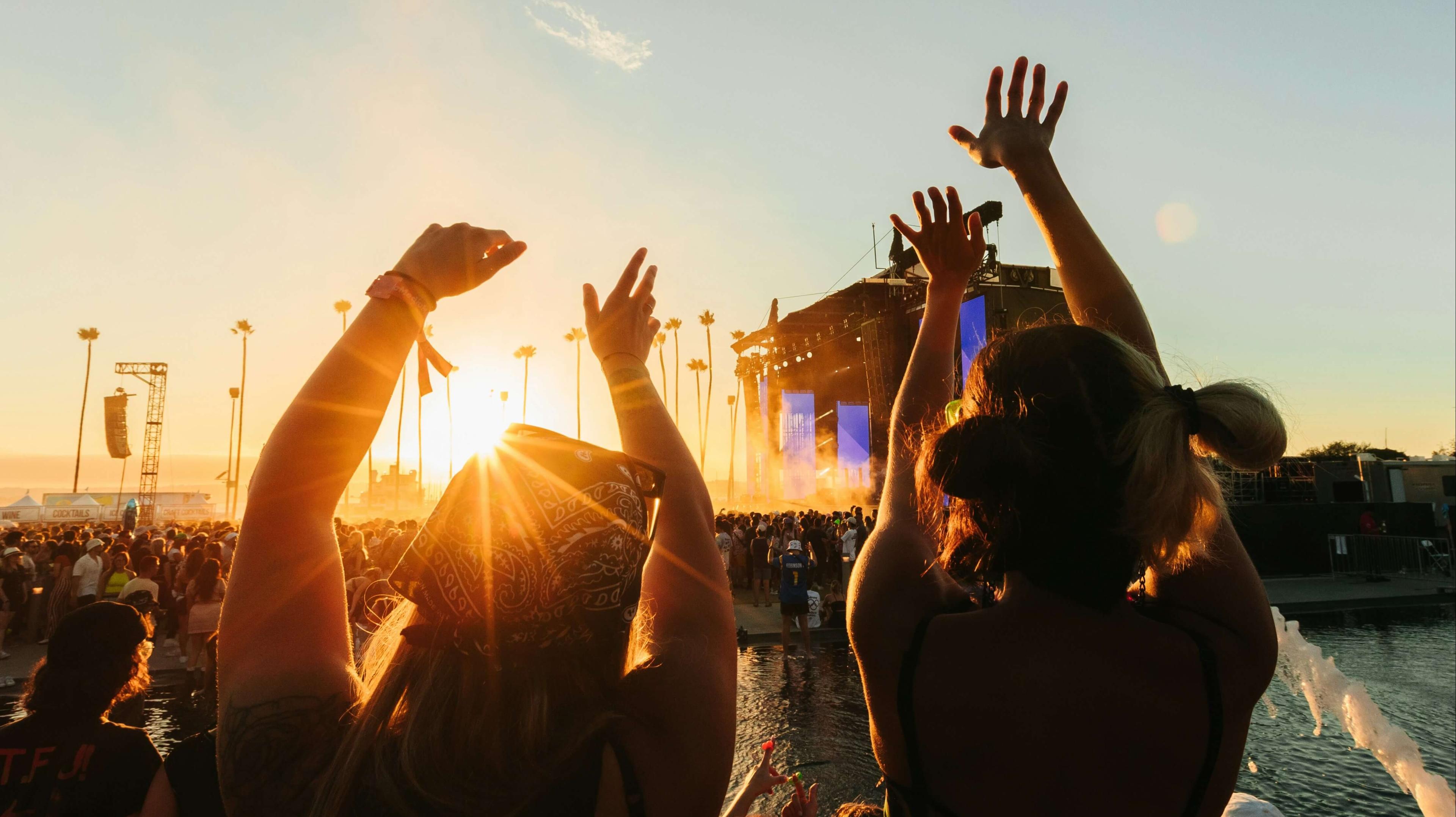
The live event season is upon us with buzz around festivals, sporting events, cultural events and branded campaigns. For marketers and agencies in this space, this is an exciting moment—the challenging work that has been taking shape over the past several months is now ready to come to life.
As “the moment of truth” we have to remind ourselves that Live Experiential Marketing (XM) has matured. What was once about scale, spectacle, and sampling is now judged on something far more demanding: Does it create meaningful brand learning and influence future behaviour?
Based on IMI’s database of 10,000+ studies and its knowledgebase from a teardown of multi-year live experience measurement programs, consistent patterns and principles have emerged. We isolated the highest-performing experiences—those earning top-tier internal rankings and strongest brand outcomes—and illustrate the top 5 shared, and repeatable design principles.
Below are the Top Five to Drive LIVE (XM) principles that separate high-impact experiential marketing from activity that is simply “well executed.”
1. One Experience. One Key Brand Learning.
The most effective live experiences are simple. They are focused on one compelling benefit.
Rather than attempting to communicate multiple messages, top-performing XM executions are built around a single, distinctive brand takeaway—something new, myth busting or clarifying that the consumer learns about the brand in that live engagement.
When experiences try to do too much, brand learning diffuses and less registers: MORE = LESS. When the brand experience does one thing well, clarity, recall, and differentiation rise together. That, my friends, is the best practice on how to build brand comprehension in one live moment.
Implication for marketers:
When consumers can sum up the experience in one sentence, clarity and brand impact are more likely to follow.
2. Participation Beats Observation—Every Time
Watching is easy. Doing is memorable. It goes deep!
High-impact experiential programs consistently move audiences from passive observation into active participation. It's even better coupled with emotion (like winning, overcoming, tasting, sharing, laughing...). Whether through choice, challenge, creation, or interaction, participation increases emotional engagement and strengthens memory formation.
This is not about complexity. In fact, the strongest participation mechanics are often the simplest—clear, fast, and intuitive... but Sticky.
Implication for marketers:
Fast, intuitive participation creates stronger engagement, recall and brand results.
3. The Brand Role Must Be Clear
The brand is hero and is the reason the experience exists. Enjoyment alone is not enough.
Some live experiences score extremely well on fun and engagement yet underperform on brand outcomes. The difference? In lower-performing programs, the brand role is unclear, it could be substituted. In high-performing XM, the brand is inseparable from the experience itself. Consumers understand why the brand is present and what it uniquely enables. This builds natural brand link to event, benefit understanding and purchase consideration.
Implication for marketers:
The strongest activations make the brand feel essential to the experience, not just present within it. Make the brand essential to the activation.
4. Design for the Second Audience: Non-Attendees
The strongest experiential programs are built for beyond attendees.
There are two audiences that fit your target:
Those few who attend,
Those many who don’t.
Top-performing experiences intentionally create moments, visuals, or outputs that extend beyond the physical footprint—It can start with a brand-driven digital presence, but the strongest XM campaigns fuel “long-tail” conversations by social sharing, face-to-face conversation that result in strong earned reach. IMI’s best practice database shows this audience can be 10 to 40 times larger than the live audience. Importantly, driving word-of-mouth (WOM) is about two tactics: i) remarkable content and ii) easy shareability: It’s not accidental or ‘lucky’. It is designed, from keen brand knowledge and hard work.
Implication for marketers:
Shareable experiences create momentum that amplifies reach, conversations, and local market impact.
5. Engagement Leads to Immersion
Finally, the most effective live experiences do not end when the interaction ends.
High-performing XM provides a clear and natural bridge from emotional engagement and new learnings to next-step consideration—whether that is digital exploration, product trial, or brand relationship building. With all steps feeling like an extension of the XM—same voice, look and feel and emotion, with an XM-dedicated landing page, NOT the brand’s home page.
This is not about hard selling. It is about continuing the momentum, naturally.
Implication for marketers:
A clear path from engagement to immersion helps turn live experience into lasting brand connection.
Final Thought
Experiential marketing is no longer judged by presence alone. It is judged by performance.
The strongest programs are not necessarily the biggest or the most expensive. They are the most intentional—designed around clear brand learning, active participation, and measurable downstream impact.
LIVE brand experience matters.
But only when it is built to drive something more.

Stay Ahead with Marketing Insights That Matter
Get exclusive access to thought leadership, case studies, and actionable insights that help you stay on the cutting edge of marketing excellence.